Monday, September 30, 2013
Informative News
http://www.huffingtonpost.com/2013/09/30/senate-obamacare-challenge-government-shutdown_n_4015252.html

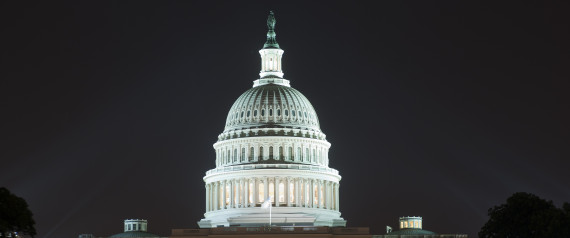
Congressmen Booze As Government Shutdown Looms
http://www.huffingtonpost.com/2013/09/28/government-shutdown_n_4010592.html#slide=more249899
Congressmen Booze As Government Shutdown Looms
The Huffington Post | By Paige Lavender Posted: 09/28/2013 10:25 pm EDT | Updated: 09/29/2013 1:22 pm EDT

Sunday, September 29, 2013
Why Fox News is Less to Blame for Polarized Politics Than You Think
I found the blog below on The Economist from the Lexington’s notebook.
There were some very great points in the post especially “The problem, it is
asserted, is that too many Americans consume their news from inside an echo
chamber that reflects their existing prejudices.” I didn’t want to add too much
of my opinion on this one, read for more!
by Lexington
AMERICAN pundits spend a good deal of their time pondering partisan intensity, and how it has sharply increased over the years. At some point in such discussions, it is traditional to note that the sorting of America into ever-more flinty conservatives and ever-more liberal progressives has coincided with the rise of cable television and the internet. The problem, it is asserted, is that too many Americans consume their news from inside an echo chamber that reflects their existing prejudices. Oh, for the time when the nation settled down around the TV to watch the network news from Walter Cronkite and his peers, who delivered a broadly centrist diet of news from home and abroad in a tone of take-your-medicine seriousness.
Some of that hand-wringing is to the point. Attend Republican or Democratic campaign rallies, and you certainly hear the same talking points from many activists there, and many of those soundbites and factoids come from cable, talk radio and the same handful of partisan blogs. What's more, when Americans are asked by opinion pollsters where they get their news, a significant proportion cite cable news (with about one in five citing Fox News, for instance).
But is much of the alarm overblown? A number of political scientists think so, after digging into the numbers. Markus Prior at Princeton has been chewing away at the problem longer than most. His latest academic paper (hat-tip the Monkey Cage political science blog) is well worth a look. Mr Prior starts with the important point that we know surprisingly little about the real audience for cable news.
The headline numbers issued by the Nielsen Company, based on samples from set-top boxes in households across America, suggest that Fox News, the highest-rated cable news channel, has an average primetime audience of about 2m, or about 0.7% of the population. But ratings are not very helpful, he writes, because they average over long portions of the day when most people are asleep or at work, and "even the average audience for individual shows in primetime obscures the number of regular viewers because it only gives full weight to someone who watches the entire show every day it airs."
TV folk are often more interested in the cumulative audience for a show, or "cume", representing the total number who watch at least a fixed number of minutes of a show or channel over a specified period, it turns out. After a lot of rootling around for non-published data, some of it relating to short snapshots of time such as a single week in March 2008, Mr Prior comes up with a more useful estimate of who watches Fox News, MSNBC, CNN and the rest:
The share of Americans who watch cable news at a rate of 10 minutes or more per day is probably no larger than 10-15 percent of the voting age population and rises modestly when an exciting election approaches. Even this estimate may be high because adding up separate cume estimates for each cable news channel amounts to double-counting people who watch more than one channel
Is that a large enough pool of viewers to explain the growing ferocity of American democracy? Surely not, though at the margins it is likely that cable news outlets turbo-charge the existing partisan fervour of their core viewers. Yet that does not explain the big national shifts that have accompanied the rise of cable news, internet blogs and other varieties of choice.
Mr Prior has an indirect suggestion for solving the puzzle. His advice is to think about the vast majority of Americans who do not watch Fox or CNN or MSNBC (even if some of them fib to opinion pollsters and say that they do) and ponder how they consume news. His depressing suggestion is that many hardly consume news at all.
In the glory days of network television, in the 1960s and 1970s, he writes: "Even people with little interest in news and politics watched network newscasts because they were glued to the set and there were no real alternatives to news in many markets during the dinner hour." However once viewers had a greater array of choices, those bored by politics gratefully turned to more entertaining channels and shows, he suggests: "The culprit turns out to be not Fox News, but ESPN, HBO, and other early cable channels that lured moderates away from the news and away from the polls."
That is an elegant thesis that needs some caveats. Turnout in presidential elections has fallenless than is commonly supposed, going by the proportion of those eligible to vote who actually cast ballots. But in other races, whether mid-term congressional elections, local races or party primaries, turnouts in America are often much lower than in other rich democracies. In such a low-turnout environment, the co-existence of a news-shunning majority and a fired-up minority of partisan news junkies is a problem.
The echo chamber exists, in short. But the main link between cable news and partisan politics may be the sheer number of Americans who cannot be bothered to tune in. To give Mr Prior the last word: "The median voter has never been so bored".
New Media
For the past couple of weeks our discussions have veered towards
new media. We started off the semester with a focus on the new advances in
media and then compared it to legendary journalist. “5 Ways New Media Are Changing Politics” Fits perfectly
with our discussions. The article
discussed 5 main changes:
1. News You Can
Choose
2. Share This
3. Like It
4.
Connect With Others
5.
Donate Now
From all of the replies that the class provided, we basically
addressed these 5 topics especially when we discussed the interview with Wael
Gohnim. The “New Age Revolution” would not have occurred without new media. The
New Age Revolution occurred due to “Share This” “Like it” and “Connect With
Others” from the list above.
http://www.usnews.com/opinion/slideshows/5-ways-new-media-are-changing-politics/2
"BIPARTISAN BASHING!"
Senate Intelligence Committee
http://www.huffingtonpost.com/2013/09/26/senators-nsa-media_n_3998229.html?utm_hp_ref=media
In the Huffington Post article "Senators
Lash Out At The Media Over Public's NSA Opposition", (Link Provided Above)
the writer addresses the Senate Intelligence Committee's accusations about the
media and Snowden creating "public skepticism and distrust" about
domestic surveillance programs.
While exploring the theme of the fickle and sometimes
turbulent relationship between mass media and politics I came across this post.
Since the time that the public found out about Snowden, senators believe that
the information provided by the media did more harm than just merely inform.
Since I created this blog to make sure that I look at every
side before making an assumption of whose argument is unwarranted, I started of
by simply reading through and ignoring the comments so that they don’t impact
how I view the article. After reading, and forming my own opinion on the story
I began to read the comments and realized that there was a common theme. From a
viewer’s point of view, the senators have no room to complain when it comes to
this story! The issue of NSA programs and tactics is not something that is
publicized or convenient for people outside the political realm to know about. This
is the type of story that I will commend the media for providing to viewers!
The senators cannot place blame on the media for information
that the government could have made easily accessible. It’s not transparent
enough for the public to know anything about; this is an example of the media
working the way that it’s meant to! From the article, I see that senator Ron
Wyden seems to be the only sensible one.
“Wyden: Joint testimony
blames media and others but this could have been avoided if Intel leadership
could have been straight w/Am people.
http://www.huffingtonpost.com/2013/09/26/senators-nsa-media_n_3998229.html
Subscribe to:
Posts (Atom)